
Understanding Tennis Scoring: A Guide for New Competitors
Introduction. If you're just starting to compete in tennis, understanding how scoring works is essential. While it may seem confusing at first, it follows a unique logic that adds excitement to the game. This guide will help you grasp the history, structure, and practical examples of tennis scoring so you can step onto the court with confidence.
Hitball Tennis
10/22/20252 min read
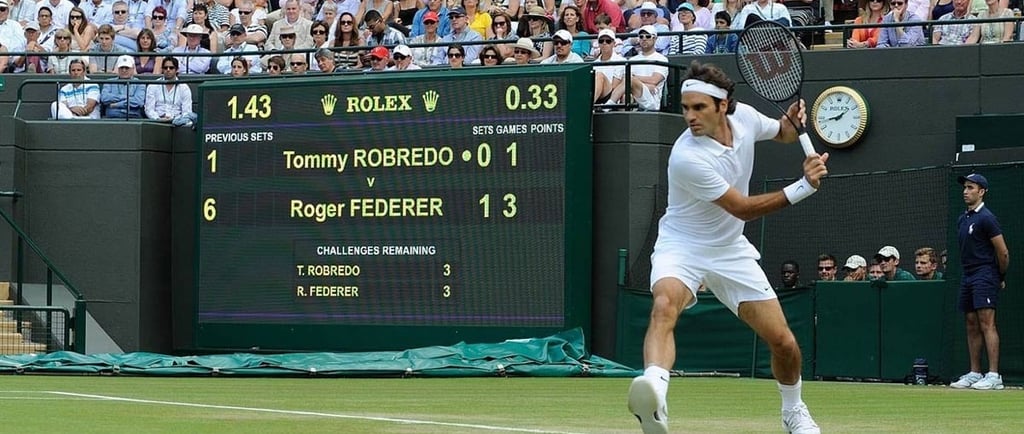
The Origins of Tennis Scoring
Tennis scoring dates back to 13th-century France. Points were originally counted in multiples of 15 (15, 30, 45), inspired by the 60-minute clock. Over time, 45 was simplified to 40 to make the game flow more smoothly.
The term "love", used to represent zero, comes from the French word l'œuf (meaning "egg"), which resembles the shape of a zero.
How Scoring Works Today
🔹 Points within a game:
0 points = "love"
1 point = 15
2 points = 30
3 points = 40
4 points = "game" (if there's a 2-point lead)
🔹 Games and sets:
A player wins a game by scoring 4 points with at least a 2-point lead.
A set is won by reaching 6 games with a 2-game lead.
Matches are typically played as best of 3 or 5 sets, depending on the competition.
🔹 Tied score:
If both players reach 40, it's called deuce.
From deuce, a player must win two consecutive points: first to gain advantage, then to win the game.
Practical Examples of Scoring
🟢 Situation 🔢 Point Sequence
Quick win 15-0 → 30-0 → 40-0 → Game
Game with deuce 15-0 → 15-30 → 30-30 → 30-40 → 40-40 → Advantage A → Deuce → Advantage B → Game B
Back-and-forth game 15-0 → 15-15 → 30-15 → 30-30 → 40-30 → 40-40 → Advantage A → Game A
With aces and errors Ace → 15-0 → 15-15 → Double fault → 15-30 → 40-30 → 40-40 → Advantage B → Game B
These examples show how games can be quick or highly competitive. Staying focused and understanding the flow of points is key.
What Is a Tie-Break?
When a set reaches 6-6, a tie-break is played:
Points are counted normally: 1, 2, 3...
The first player to reach 7 points with a 2-point lead wins the tie-break and the set.
Tips for Beginners
Stay calm: Even if you're behind, the game can turn around quickly.
Observe your opponent: Learn their style and adjust your strategy.
Practice deuce and tie-break situations: These are often decisive.
Announce the score clearly: It's part of the game and helps everyone stay on track.
Always call the score before serving or returning: This builds good habits and keeps the match organized.
Fun Facts
The longest match in history was between John Isner and Nicolas Mahut at Wimbledon 2010, ending with a fifth set score of 70-68.
The scoring system was designed to keep matches suspenseful and every point meaningful.
Conclusion
Tennis scoring is more than just numbers — it's part of the thrill of the sport. With this guide, you're ready to step onto the court and begin your journey as a competitor.
The more you practice, the more naturally you'll understand and apply the scoring system. At first, it might feel tricky to remember the order, but it quickly becomes second nature.
Remember: Always announce the score before each serve or return. This helps you stay focused and ensures everyone — including your opponent and any officials — is on the same page.
Have questions or want to improve?
📩 I’d love to help you!
If you have any questions or want to schedule a lesson to practice scoring and other tennis fundamentals, feel free to reach out.
👉 Click here to contact HitBall Tennis
🎯 Count on me to support your progress. Let’s grow together!